
From hybrid to human – Reflections on FlexForward2026
At FlexForward2026 in February, the Flex Matters team were delighted that so many attendees were keen to share how flexible working already benefits their companies & teams and to how eager they were to learn from their peers.
Setting the Scene: From Perk to Expectation
Emma Cleary opened the morning and reflected on how quickly the landscape has shifted. A decade ago, flexible working was virtually non-existent for most employees and was most definitely a perk. Today, it is no longer a benefit to be negotiated, it’s an expectation. Many organisations describe themselves as flexible, while the experience of employees and candidates tells a different story.

Too often, “flexible” means hybrid by mandate – a set number of office days decided by the business, rather than genuine flexibility over hours, location, workload or autonomy. An interesting segway in the conversation was the number of attendees who weren’t clear even now on the definition of hybrid working.
What the Research Tells Us
Bonamy Waddell (Bon Insight) presented findings from Flex Matters’ candidate and employer surveys, painting a detailed picture of where the market actually stands.
The recognised benefits of flexible working were confirmed across the room:
- Work – life integration
- Improved wellbeing
- Greater productivity and focus
- Higher engagement
- Better retention
But the most striking finding was what stops unhappy employees from leaving – fear.
Two-thirds of candidates surveyed worried that moving to a new role would mean losing the flexibility they currently have, even if they are dissatisfied. This means flexibility has become a powerful retention lever, but one that can also trap employees in the wrong roles if employers communicate it vaguely or inconsistently.
The research also challenged an outdated assumption: flexible working is not just a parenting issue. While childcare and elder care were commonly cited, many employees are seeking flexibility for health, personal interests, side projects, and building a simply sustainable life. Hybrid, on its own, is no longer compelling as a headline benefit. Candidates want clarity on hours, outcomes and autonomy.
The Evidence for Four-Day Working
Dr Charlotte Rae (Sussex 4 Day Week) presented data from local trials with a range of Sussex-based employers, using a 100% pay, 80% time, 100% output model. The results were consistent and compelling:
- Burnout reduced by approximately 18% on average
- Work engagement rose by around 8%
- Sleep quality improved quickly following the switch
- Self-reported productivity climbed steadily over time
Charlotte also shared emerging neuroscience that supports these findings: better rest appears to strengthen connectivity in the brain networks associated with creativity and problem-solving. This reframes wellbeing not as something separate from performance, but as one of its key drivers.
The data consistently pointed to the same conclusion: employee wellbeing and business performance are not in competition. They are closely interlinked.
Making It Work in Practice
Emma Cleary shared her own experience running a four-day week trial, and the lesson was practical: flexibility succeeds when leaders redesign the working week, not simply remove a day. By moving key decisions earlier, time-blocking important conversations, and being intentional about how the week was structured, Emma protected capacity without clients noticing any drop in service.
The message was clear: reactive business is not a sign of productivity. Intentional systems are always more effective.

Key Takeaways for SME Leaders
The day distilled into five practical principles:
- Stop labelling hybrid as flexibility. Be explicit about what can actually flex: hours, location, days, and how decisions are made.
- Build a culture of trust and outputs. Measure contribution by outcomes, not visibility, and equip managers to coach this approach.
- Ask your people what they need. The highest-impact changes often come from one honest conversation.
- Treat flexibility as a performance strategy. Reduced burnout and better sleep are directly linked to stronger engagement and productivity.
- Run experiments, not revolutions. Trial, gather feedback — including from clients — iterate, and formalise what works.
We have included the full presentation from FlexForward2026, if you’d like to delve further into our morning – including detailed responses to our candidate survey and the data behind the 4 day week trials.
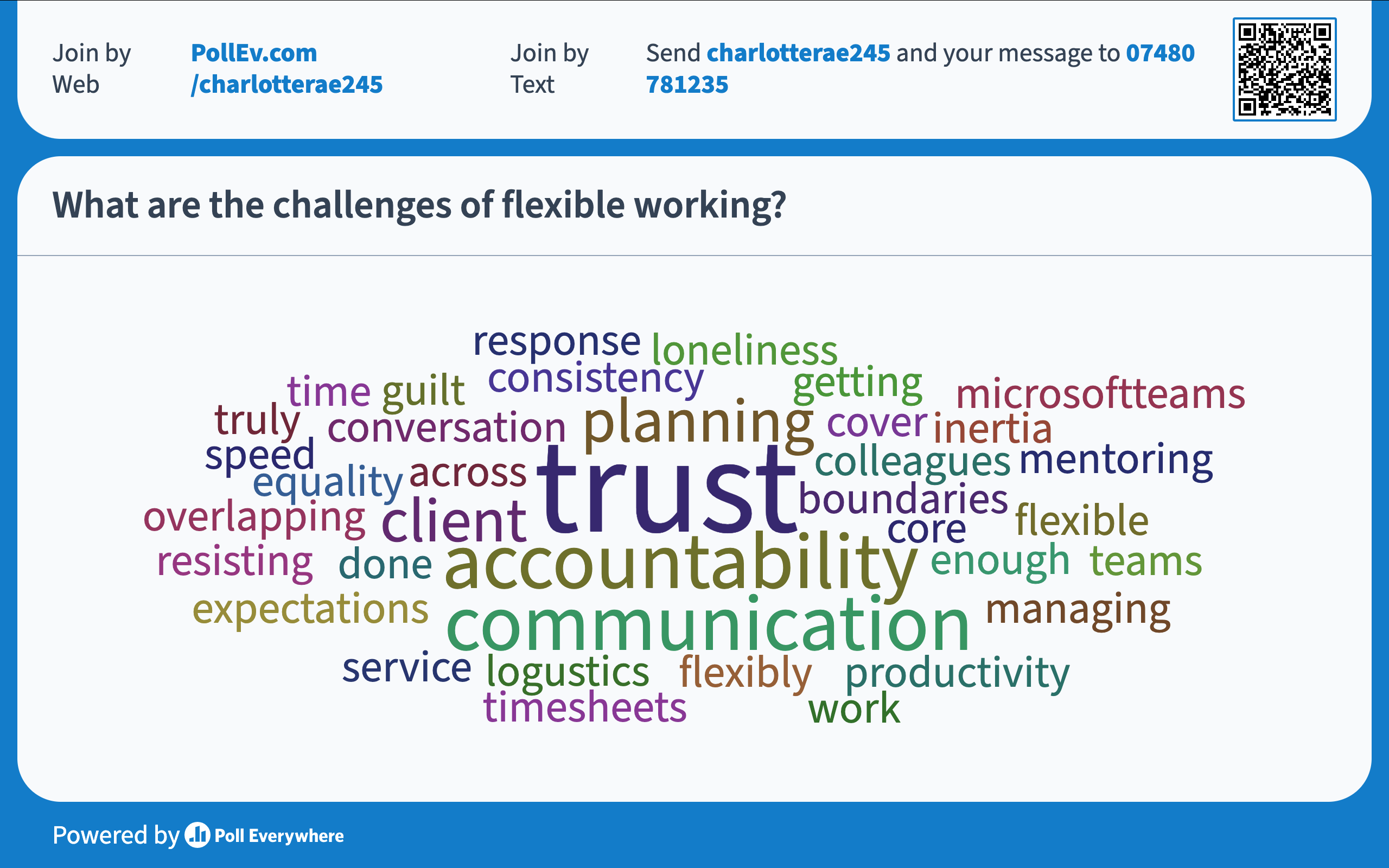
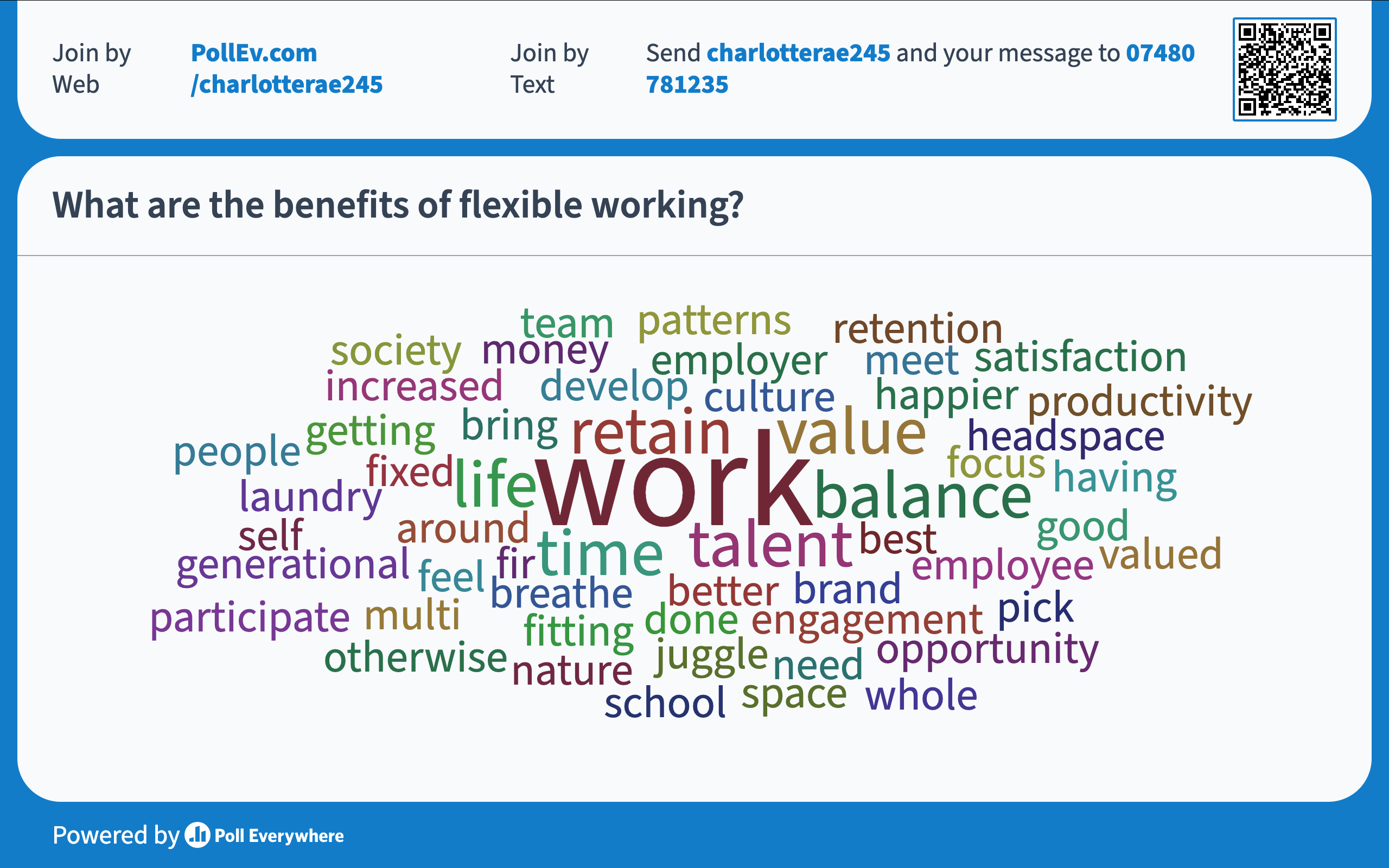
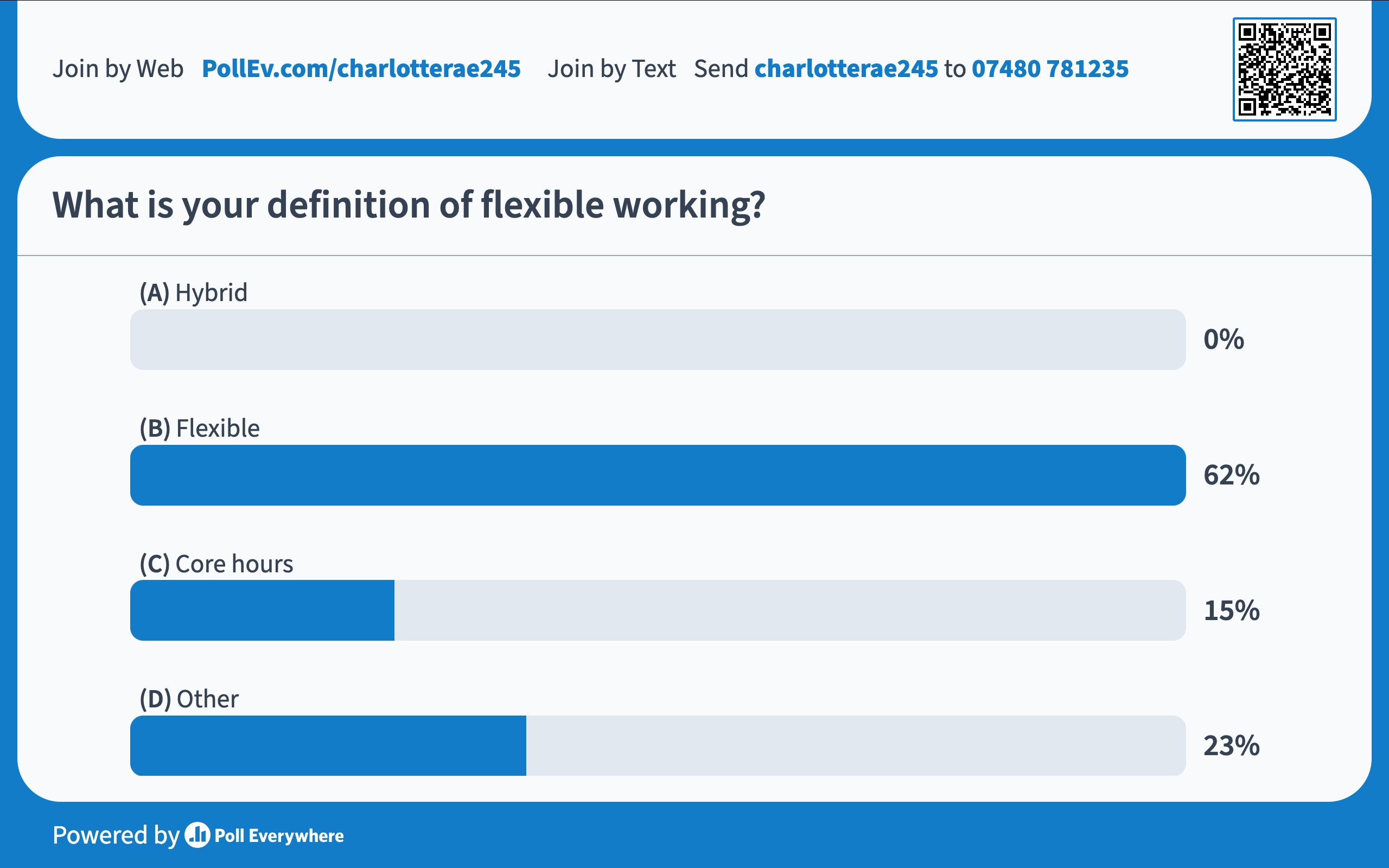
We believe in working smarter, not just harder. That’s why we partner with businesses to design flexible working solutions that meet both organisational goals and human needs. If you’d like to know more about implementing flexible working, or have a flexible role to fill, talk to our team today – email emma@flexmatters.co.uk or lorraine@flexmatters.co.uk, or click the Contact Us button below.


